Rottweiler Weight by Age: Height, Adult Ranges, and Growth Tracking
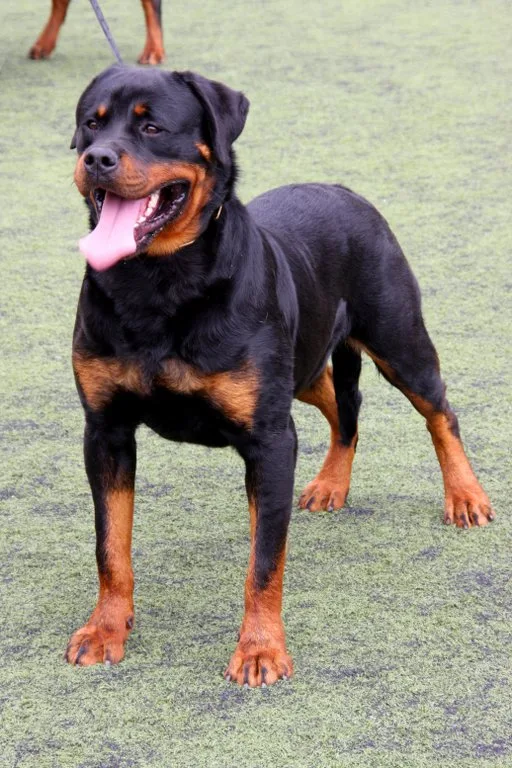
Photo: https://www.flickr.com/photos/azuaje/ via Wikimedia Commons, CC BY-SA 2.0
Rottweilers are large working dogs built for strength and endurance. Owners often want a single “correct” weight for every age. The AKC Official Standard of the Rottweiler defines size primarily by height at the withers, with preferred ranges and an emphasis on overall balance and substance. This guide sticks to that language, then explains how to track growth with your veterinarian—without invented month-by-month charts.
What the AKC standard says about size
The Official Standard describes preferred heights of 24–27 inches for males and 22–25 inches for females, with the middle of each range preferred. It does not replace a veterinary exam with a single adult weight rule. Substance, proportions and condition matter alongside height.
The AKC Rottweiler breed profile also lists average adult weight bands of roughly 95–135 pounds (males) and 80–100 pounds (females), plus a listed life expectancy of about 9–10 years. Treat those weight bands as population references, not a guarantee that every healthy adult will land in the exact middle.
Adult ranges are not monthly targets
There is no official AKC table that says what every Rottweiler must weigh at 3, 6 or 9 months. Salt et al. (2017) studied growth-standard charts for monitoring bodyweight in dogs more broadly. Useful research is not the same as a breed-club growth calendar. Bring serial weigh-ins to your veterinarian and ask how your puppy’s trajectory looks for this breed.
The AKC Breed Weight Chart can be a general reference for adult size conversations. Prefer body-condition scoring with your vet over chasing one chart cell.
Why lean growth matters for joints
VCA’s Rottweiler overview notes increased risk of joint disease (including hip and elbow dysplasia) and certain cancers. On hip dysplasia specifically, VCA explains that diet, calories and growth rate during puppyhood are important risk factors in large breeds, and that measured feeding has been associated with lower dysplasia rates in studied at-risk puppies compared with free-feeding.
Many veterinarians recommend large-breed puppy food and measured meals for at least the first year. See also VCA’s guidance on feeding growing puppies. Do not invent calorie targets from the internet—ask your vet.
How to track weight without guessing
- Weigh on a consistent schedule (for example at wellness visits, or at home on the same scale) and write the date down.
- Score body condition with your veterinarian using a chart such as the WSAVA BCS. You should be able to feel ribs under a slight fat cover and see a waist from above.
- Watch for sudden changes. Rapid gain, loss or a puppy that looks soft and heavy relative to frame is a conversation for the clinic—not a reason to crash-diet at home.
- Keep the records. A simple weight journal helps your vet spot trends early.
Bottom line
Height ranges and adult weight bands from AKC describe the breed. Healthy growth for your Rottweiler is a veterinary conversation built on serial weigh-ins, body condition and a measured feeding plan—especially while joints are still developing.
Frequently asked questions
How big do Rottweilers get?
The AKC Official Standard of the Rottweiler gives preferred height ranges of 24–27 inches at the withers for males and 22–25 inches for females, with the middle of each range preferred. The conformation standard focuses on height and overall substance rather than a single official weight number.
What adult weight ranges does AKC list for Rottweilers?
The AKC Rottweiler breed profile lists average adult weight bands of about 95–135 pounds for males and 80–100 pounds for females. Those figures describe a breed population range, not a mandatory target for every dog. Your veterinarian should help interpret a healthy weight for your individual Rottweiler.
Is there an official month-by-month Rottweiler puppy weight chart?
The AKC breed standard does not provide a month-by-month growth table. Growth varies by individual. Salt et al. (2017) published research on growth-standard charts for dogs in general; your veterinarian is the right person to interpret serial weigh-ins for your puppy.
Why does growth rate matter for large-breed puppies?
VCA notes that diet, calories and growth rate during the rapid growth phase are important risk factors related to hip dysplasia in large-breed dogs. Many veterinarians recommend large-breed puppy diets and measured meals rather than free-feeding. Ask your vet what feeding plan fits your puppy.
How should owners use body condition scoring?
WSAVA publishes a dog Body Condition Score chart that helps you and your veterinarian judge fat cover and muscle, not just scale weight. Prefer serial weigh-ins plus BCS over chasing a single chart cell.
A quick note: this guide is general information from published sources, written by dog lovers, not a veterinarian. Your own vet knows your dog's history, so check with them before changing food, exercise or treatment.
Sources
- AKC: Official Standard of the Rottweiler (PDF)
- AKC: Rottweiler breed information
- AKC: Breed Weight Chart
- VCA Animal Hospitals: Rottweiler breed overview
- VCA Animal Hospitals: Hip Dysplasia in Dogs
- VCA Animal Hospitals: Feeding Growing Puppies
- WSAVA: Dog Body Condition Score chart
- Salt et al. (2017): Growth standard charts for monitoring bodyweight in dogs, PLOS ONE
Keep reading
Rottweiler Hip & Elbow Dysplasia and Osteosarcoma: Vet Awareness Guide
What VCA, OFA, ACVS and Cornell say about hip dysplasia, elbow dysplasia and osteosarcoma risk in Rottweilers—screening language, warning signs and why this is awareness (not a diagnosis).

Rottweiler Socialization and Training: Building a Steady Guardian
What AKC and VCA say about early socialization, confident leadership and training for Rottweilers—without promising a finished temperament overnight.